


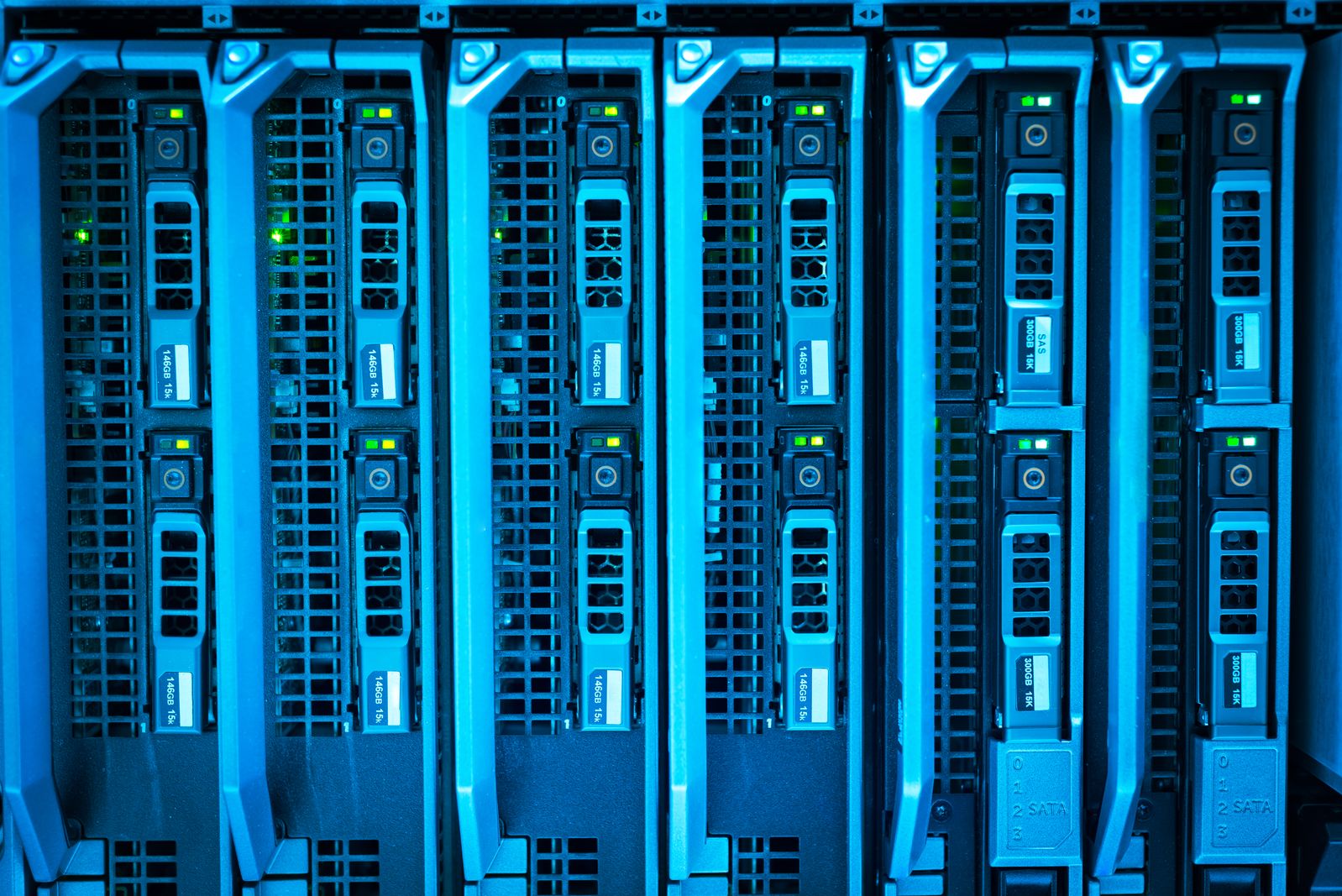
Nvidia e Broadcom estão protegidas de crise de energia nos EUA, segundo a Morgan Stanley, que estima déficit de 34 % de energia em data centers até 2028, equivalente a 32 GW.
Estimativa de déficit de energia
The Economic Times (Índia) reports that Morgan Stanley calculated last month that US data-center developers will face a 34 % net power shortfall through 2028, equivalent to 32 GW after accounting for behind-the-meter generation and fuel cells.
The same outlet notes that the AI boom has triggered billions of dollars in data‑center investment, but the growing computing and electricity demands of generative AI are colliding with US power‑supply limitations.
Morgan Stanley and Goldman Sachs have both highlighted increasing constraints on the US data‑center buildout; Goldman Sachs expects only limited near‑term impact from political pushback, whereas Morgan Stanley points to labor, power and political challenges as the main obstacles.
The 34 % figure was derived after adjusting demand projections with the possible contribution of distributed energy sources and storage, according to The Economic Times.
The Economic Times também explica que o déficit de 34 % representa a lacuna entre a oferta de energia disponível e a demanda esperada pelos novos data centers que suportam cargas de trabalho de IA generativa.
Impacto na cadeia de suprimentos de chips
Morgan Stanley said that the energy bottlenecks do not jeopardize Nvidia’s or Broadcom’s 2027 revenue forecasts, citing the companies’ visibility into chip placement, geographic expansion and coordination among data centers, semiconductor suppliers and the power supply chain.
The brokerage warned that, if chip capacity cannot be deployed, customers may postpone deliveries or cancel orders, with memory, optics, power‑management and analog components being the most exposed to inventory disruptions.
This view was echoed by CNN Brasil and InfoMoney, which stressed that any delay in AI‑related infrastructure could affect makers of secondary chips, while Nvidia and Broadcom remain relatively shielded from the power crunch.
The Economic Times adds that, although the two giants are better positioned, other suppliers of secondary components could face stock interruptions if the deployment delays persist.
A CNN Brasil destaca que Nvidia e Broadcom permanecem relativamente isoladas do agravamento da crise de energia nos centros de processamento de dados dos Estados Unidos.
O que ainda não foi divulgado
The material does not specify which behind‑the‑meter generation technologies or which types of fuel cells were considered in the 32 GW estimate.
No exact time horizon beyond 2028 is provided for the projected power deficit.
There is no mention of concrete mitigation plans being adopted by data‑center operators or by energy providers to alleviate the shortfall.